A Fireworks Culture With Roots in the Edo Period
The Edo period plays an important role in the
The tradition of watching fireworks beside rivers is particularly significant and can still be seen in many modern fireworks festivals. Large groups gathering in one place to watch displays unfold over the water and across the night sky remain one of the most recognizable scenes of summer in Japan.
Fireworks Festivals and the Japanese Summer
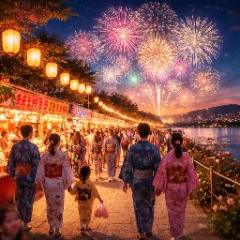
Fireworks festivals are also a way to experience the atmosphere of the summer season.
Families and groups of friends may travel to riverside viewing areas, wear yukata, walk through festival grounds, and buy food from rows of traditional stalls before the fireworks begin. These activities are as much a part of the experience as the display itself.
Walking between stalls selling yakisoba, takoyaki, shaved ice, and other festival foods while waiting for darkness to fall helps create the distinctive atmosphere associated with a Japanese summer night. For many visitors, the anticipation before the first firework is part of what makes the occasion memorable.
Seasonal Events That Bring Local Communities Together
Fireworks festivals across Japan have their own histories, traditions, and local characteristics.
Some are major events held in large cities and attract enormous crowds, while others form part of smaller local festivals. For residents, these celebrations can provide an opportunity for relatives and friends who live elsewhere to return home and spend time together.
Fireworks festivals also attract visitors from outside the region. This makes them an important part of seasonal tourism, particularly in areas where annual displays have become closely associated with the identity and summer calendar of the community.
What It Takes to Organize a Major Fireworks Festival
Behind the colorful displays is a large amount of planning and coordination.
Major fireworks festivals involve far more than preparing and launching fireworks. Organizers must consider crowd safety, traffic management, venue preparation, security, emergency medical support, and coordination with residents and businesses in surrounding areas.
When tens or hundreds of thousands of spectators arrive in the same area, railway stations, roads, and pedestrian routes can become extremely crowded. Cooperation between event organizers, municipalities, police, transport operators, emergency services, and other local organizations is therefore an essential part of running these events safely.
The ability to enjoy a spectacular display often depends on preparation that visitors never see. Careful crowd management and safety planning allow large numbers of people to share the experience while reducing risks for spectators and the surrounding community.
Fireworks Traditions Across Different Parts of Japan
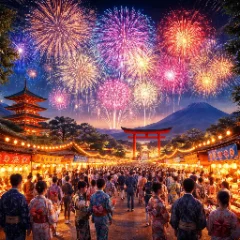
Japanese fireworks culture varies considerably from one region to another.
Long-established festivals may follow traditions and organizational practices that have developed over generations. The relationship between the fireworks event and the surrounding community can also differ depending on local history and geography.
Even though all of these events may be described as fireworks festivals, the atmosphere of a large urban display can be very different from that of a smaller regional celebration. In some places, fireworks are closely tied to a wider festival, while elsewhere the display itself is the main event.
Understanding these differences makes it possible to see Japanese fireworks as more than a tourist attraction. They are also part of the cultural identity and seasonal traditions of the communities that organize them.
The Shared Experience Around Japanese Fireworks
Another important part of Japanese fireworks culture is the shared experience surrounding each event. Spectators often arrive hours before the display, choose viewing spots, meet friends, and spend time enjoying the festival atmosphere. This sense of anticipation turns the evening into more than a scheduled performance.
Even after the final fireworks fade, the experience continues through the journey home, conversations about favorite displays, photographs, and memories associated with that particular summer. In this way, fireworks festivals often become personal traditions as well as public events, giving people a reason to return year after year.
They can also create a strong sense of continuity between generations. Parents who attended local fireworks festivals when they were younger may later return with their own children, passing on familiar routines such as choosing a viewing spot, wearing yukata, or buying the same festival foods. Over time, these repeated experiences help make fireworks festivals part of personal and family memories, not just seasonal entertainment.
What Fireworks Mean in Modern Japan
Daily life and entertainment in Japan continue to change, but fireworks festivals still attract large crowds each summer. Part of their lasting appeal may come from their ability to create a shared seasonal experience and bring people together in a way that feels distinct from everyday life.
Watching fireworks with family, walking through a festival with friends, or arriving at a riverside venue dressed in yukata are experiences that continue to be shared across generations.
Japanese fireworks are brief flashes of light in the night sky, but the culture surrounding them connects much more: history, local communities, tourism, food, fashion, family traditions, and memories of summer.
This site explores Japanese fireworks culture from a variety of perspectives, including the history of fireworks festivals, regional traditions, event organization and safety, and the place these celebrations continue to hold in modern Japanese society.